
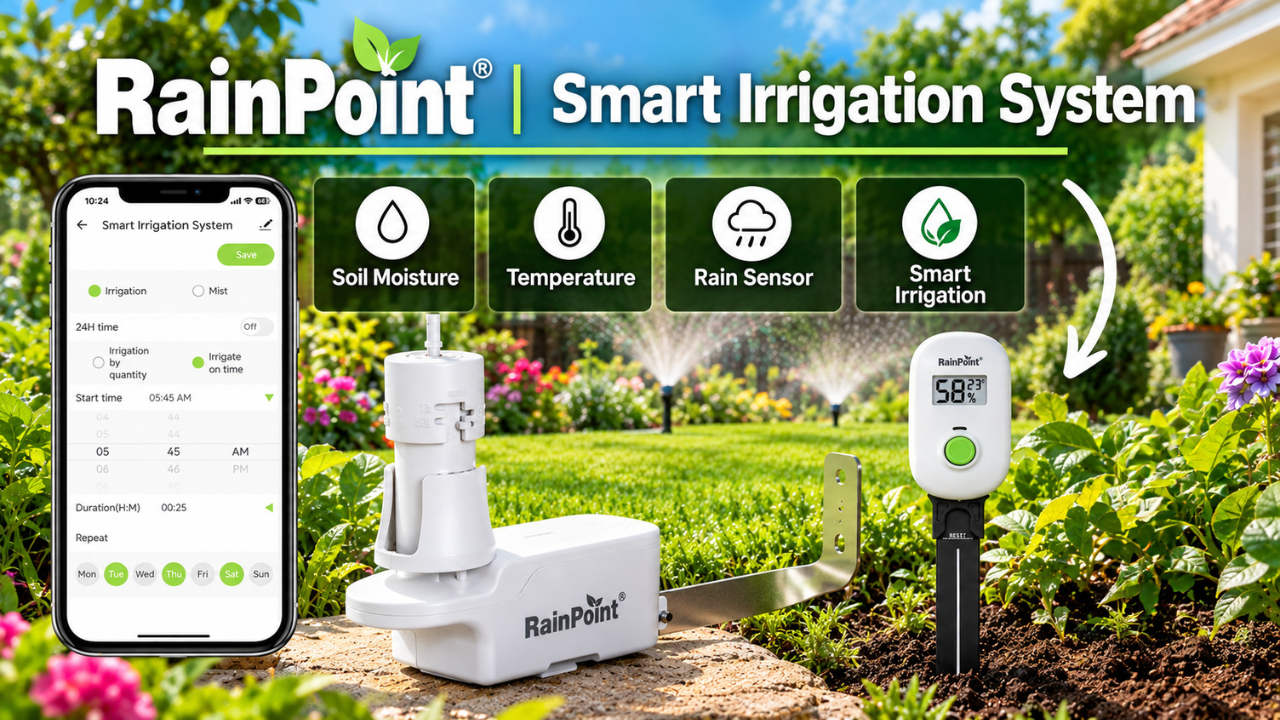
Smarter watering starts with better information. The RainPoint Smart Irrigation System combines smart water timers, soil moisture monitoring, and weather-related features to help homeowners manage lawn and garden watering more efficiently.
Instead of relying only on a fixed schedule, compatible smart irrigation devices can use soil conditions and weather information to help determine when watering is necessary.
How Does RainPoint Smart Irrigation Work?
A traditional sprinkler timer follows a preset schedule, even when the soil is already moist. RainPoint offers a smarter approach through connected irrigation products.
Here is how the main components work together:
- Soil Moisture Sensor: Measures soil moisture and, on supported models, soil temperature and other environmental readings.
- Rain Sensor: Detects rainfall and can help suspend scheduled watering when its configured rainfall threshold is reached.
- Smart Water Timer: Controls water flow according to the watering schedule and supported automation settings.
- Wi-Fi Hub and Mobile App: Connect compatible devices and let you manage watering schedules and view available sensor readings.
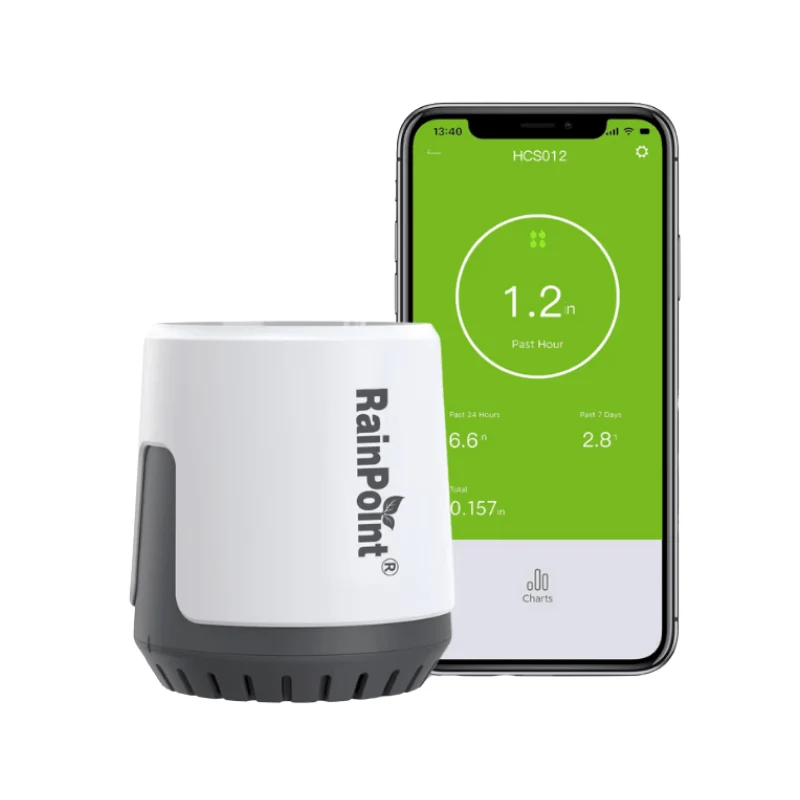
Together, these components can help reduce unnecessary watering and make garden maintenance more convenient. However, automatic features depend on the specific products, their compatibility, and the settings you choose.
RainPoint Products for Smarter Watering
RainPoint offers a range of products to help build a connected watering system.
| Product | Main Purpose |
|---|---|
| Smart Water Timer | Automates scheduled watering |
| Soil Moisture Sensor | Monitors moisture conditions in the soil |
| Wireless Rain Sensor | Detects rainfall to help prevent unnecessary watering |
| Irrigation Tubing | Distributes water around garden areas |
| Garden Hose and Splitter | Connects and directs water to different outlets |
| Multi-Pattern Nozzle | Provides different spray patterns for manual watering |
Important: Check product compatibility before purchasing. Not every timer supports every sensor or automatic watering feature.
Where To Buy? Visit our Essential Tools For Smart Gardeners
💰 Can Smart Irrigation Save Water and Money?
One major benefit of smart irrigation is its potential to reduce water waste.
According to the University of Florida’s IFAS Extension, an in-ground irrigation system watering a typical quarter-acre residential lot with half an inch of water can use approximately 2,000 gallons per watering cycle.
When irrigation runs unnecessarily, that water can add to household expenses. Soil monitoring and rainfall-based controls can help homeowners avoid some unnecessary watering.
For example, if a household spends $200 per month on water during a high-irrigation period, and reducing irrigation lowers the bill by 20%, the saving would be $40 per month.
That’s a hypothetical calculation, not a guaranteed RainPoint saving. Actual results depend on local water rates, weather, garden size, and existing watering habits.
⚙️ Is RainPoint Worth Considering?
RainPoint may be a useful option for homeowners who want to automate garden watering, monitor soil conditions, and spend less time adjusting irrigation schedules manually.
It can be particularly helpful for lawns, flower beds, and home gardens where watering needs change with rainfall and soil moisture.
Before buying, consider your garden layout, water supply, Wi-Fi requirements, sensor compatibility, and budget.
🌿 Final Thoughts
The RainPoint Smart Irrigation System demonstrates how connected technology can make everyday garden care more convenient. By combining smart timers with soil moisture monitoring and rainfall detection, compatible setups can help users make more informed watering decisions.
The goal isn’t simply to water automatically—it’s to water when needed, reduce unnecessary waste, and manage your garden more intelligently.
Explore RainPoint Products
Visit the official RainPoint website to explore smart water timers, soil sensors, rain sensors, and other garden irrigation products.
Want to learn more about modern agriculture and smart irrigation? Explore more practical technology guides at Smart Farming Inside.
1 thought on “RainPoint Smart Irrigation System: How Soil & Rain Sensors Work Together”